
Paulding County Court Records After a Jail Arrest
Court records after a jail arrest in Paulding County usually start with the Paulding County Jail booking record, then move to prosecutor and court review. The jail is operated by the Paulding County Sheriff's Office, led by Sheriff Jason K. Landers, at 500 East Perry Street in Paulding. The jail roster may show the person's mugshot, race, sex, age, arrest date, and hold reasons. Those hold reasons can include a charge label, a warrant type, a probation violation, a sentenced hold, a bond condition, or another agency's hold.
The formal court record is different. The Paulding County Prosecutor's Office, headed by Prosecutor Joseph R. Burkard, handles the criminal charging path. The prosecutor's Criminal Division prosecutes felony offenses in Paulding County Common Pleas Court and misdemeanor and traffic offenses in Paulding County Court. Use jail inmate records for current custody and booking facts, and use jail roster mugshots for booking-photo questions. Use court records after an arrest to confirm filed charges, case status, outcomes, and orders.
The prosecutor website is an official source for the local charging role. The screenshot below comes from the Paulding County Prosecutor's Office website.
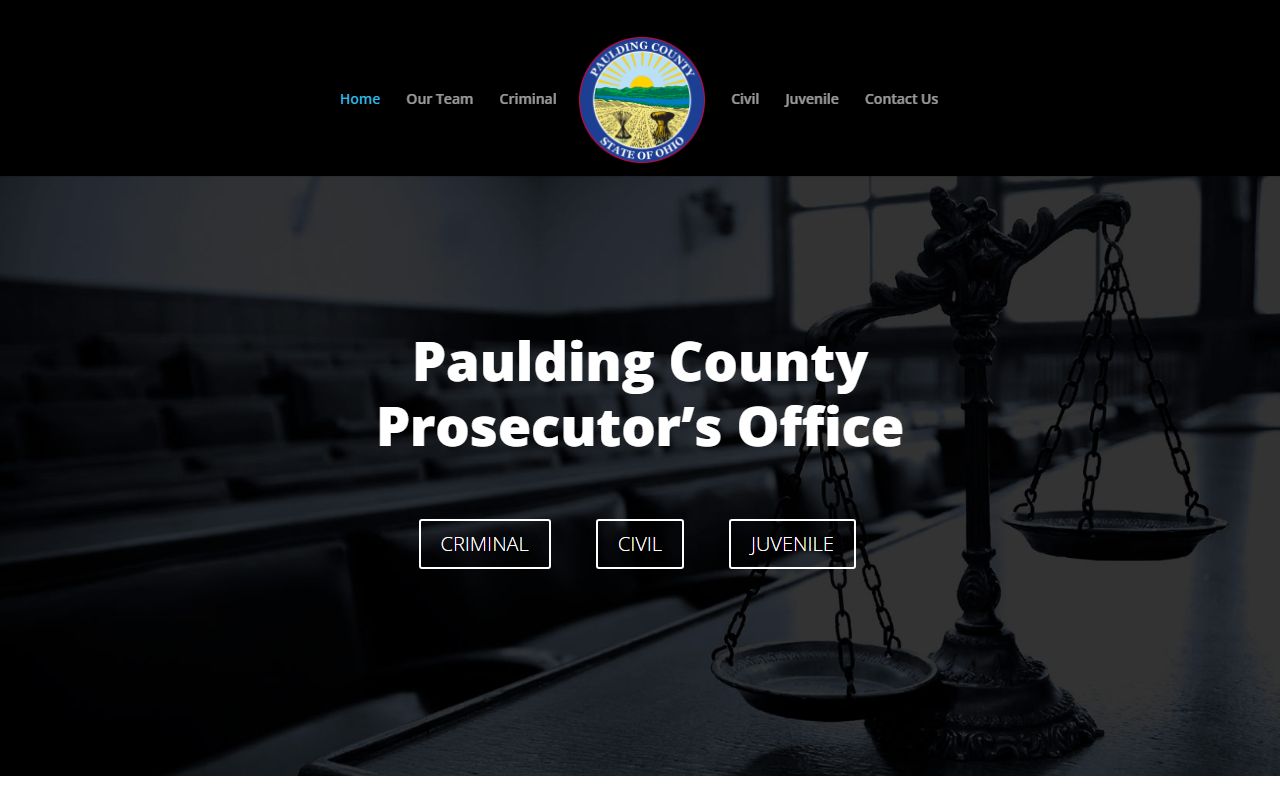
That office is the link between a jail arrest and the court case when formal criminal charges are pursued.
How to Find Paulding County Court Records After an Arrest
Start with the custody record, then move to the court that fits the charge. The official current-inmate portal can identify the arrest date, name spelling, warrant wording, bond note, and custody status. A misdemeanor, traffic offense, OVI, municipal probation issue, or lower-court bench warrant commonly points first to the Paulding County Municipal Court Record Search. Felony criminal cases, indictments, felony dispositions, and cases after bindover point to Paulding County Common Pleas Court and clerk resources.
- Open the jail roster first if the arrest is recent and note the exact name, arrest date, hold reason, warrant type, and bond language.
- Search the Municipal Court record search by defendant name for misdemeanor, traffic, OVI, domestic violence misdemeanor, municipal probation, and many bench-warrant matters.
- Check Common Pleas resources when the roster or charge language points to a felony, indictment warrant, information, bindover, or felony disposition.
- Open the case and read every charge line, including the statute citation, degree, filing document, bond entry, hearing history, plea, dismissal, or sentence.
- If nothing appears online, contact the appropriate clerk. New cases may not appear immediately after booking, and older records may require clerk-assisted retrieval.
Ohio Bureau of Criminal Investigation background checks are separate from public court dockets. A BCI criminal-history check may require fingerprints, a fee, and an authorized purpose. It should not be treated as a substitute for Municipal Court or Common Pleas case lookup when the question is what happened in court after a Paulding County arrest.
| Municipal Court Search Field | How to Use It | Notes |
|---|---|---|
| Record Search / CaseLook | Use the official public search page for Municipal Court records. | The page includes a CaseLook notice and legal disclaimer. |
| Defendant Name | Search by last name or full defendant name when the case number is unknown. | Use the spelling shown on the jail roster, then try reasonable variants. |
| Case Number | Use when a citation, clerk notice, bond paperwork, or docket entry gives a case number. | Best for avoiding same-name results. |
| Disclaimer Acceptance | Review and accept any notice before entering the search. | CaseLook pages often require acknowledging the public-access disclaimer. |
How Charges Get Filed After an Arrest: Complaint, Information, and Indictment
After an arrest, jail staff create a custody record, but the charging document starts the court case. The roster's hold text may be enough to explain why a person is in custody, yet it is not always the same as the prosecutor's final filing. Paulding County sample roster data included bench warrants, arrest warrants, indictment warrants, domestic violence misdemeanor language, OVI felony language, possession of drugs felony language, municipal probation violation language, sentenced holds, and outside-facility holds. Court records after a jail arrest sort those booking-level labels into filed charges and judicial orders.
| Complaint | Information | Indictment | |
|---|---|---|---|
| Filed By | Law enforcement or prosecutor in lower-court practice. | Prosecutor. | Grand jury after prosecutor presentation. |
| Common For | Misdemeanors, traffic, and initial lower-court filings. | Some felony paths where prosecution proceeds by prosecutor-filed charging paper. | Felony cases requiring grand-jury charging, including serious felony matters. |
| What It Starts | A case in the court where the complaint is filed. | A formal felony charge path in the proper court. | A Common Pleas felony case or warrant path tied to the indictment. |
| How It May Appear | Charge, citation, complaint, or misdemeanor docket entry. | Information, felony charge, plea or arraignment entry. | Indictment or indictment warrant language. |
Charge Status in Court Records After an Arrest
Charges can change after booking. A jail record may show the arrest reason that brought the person into custody, while the court docket later shows that a charge was amended, reduced, dismissed, bound over, resolved by plea, or sentenced. A probation violation may point back to an older case. An outside-agency hold may mean Paulding County Jail is housing the person while another court or agency controls release. Always read each charge status separately instead of assuming all counts have the same outcome.
| Status | What It Means | What to Check Next |
|---|---|---|
| Pending | The charge is active and no final disposition is shown. | Look for the next hearing, bond order, and whether the case is in Municipal Court or Common Pleas. |
| Amended / Reduced | The original charge changed to another offense or lower degree. | Compare the original complaint or indictment with the current charge line. |
| Dismissed | The court dismissed the charge, sometimes without resolving other counts. | Confirm whether dismissal applies to one charge or the whole case. |
| Nolle Prosequi | The prosecutor declined to continue that charge in that case. | Check whether any related case, refiling, or remaining count exists. |
| Convicted / Guilty | A plea or verdict resulted in a conviction on that charge. | Read the sentencing entry and any jail, probation, fine, or community-control terms. |
| Bound Over | A felony matter moved from lower court toward Common Pleas review. | Search Common Pleas for the later felony case number and indictment or information. |
Bond and Release After an Arrest
Bond is a court decision, not just a jail website entry. Ohio bail law includes ORC 2937.011 for bail considerations and ORC 2937.22 for bail and appearance bonds. Paulding roster examples used terms such as no bond, sentenced, cash or credit-card bond, and Set By Judge. Confirm the current bond with the jail at (419) 399-2170 or the proper court before paying. The sheriff site links Access Corrections for commissary/bond and LexisNexis for online jail fees and records-request payment, but commissary money is not the same thing as bond.
| Bond Type | How It Works |
|---|---|
| Cash or Credit-Card Bond | The roster may show a dollar amount that must be confirmed with jail or court staff before payment. |
| Surety Bond | A surety or bonding company may post bond when permitted by the court order. |
| Recognizance / Personal Bond | The person is released on a promise to appear and comply with court conditions. |
| No-Bond Hold | Ordinary payment will not release the person unless the court changes the hold. |
| Sentenced or Other-Agency Hold | Bond may be irrelevant because the person is serving jail time or held for another agency. |
Warrants That Lead to an Arrest
A warrant can be the reason a person appears in the Paulding County Jail roster. The official Paulding County warrant portal is a free Zuercher/CentralSquare search linked from the sheriff's site. Its public configuration includes optional name, race, sex, bond amount, and charge filters, with result columns for name, race, sex, age, bond amount, date issued, and charge. A warrant may appear in the warrant portal before an arrest, while the jail roster shows the person only after custody begins.
The screenshot below comes from the official Paulding County warrants search portal.
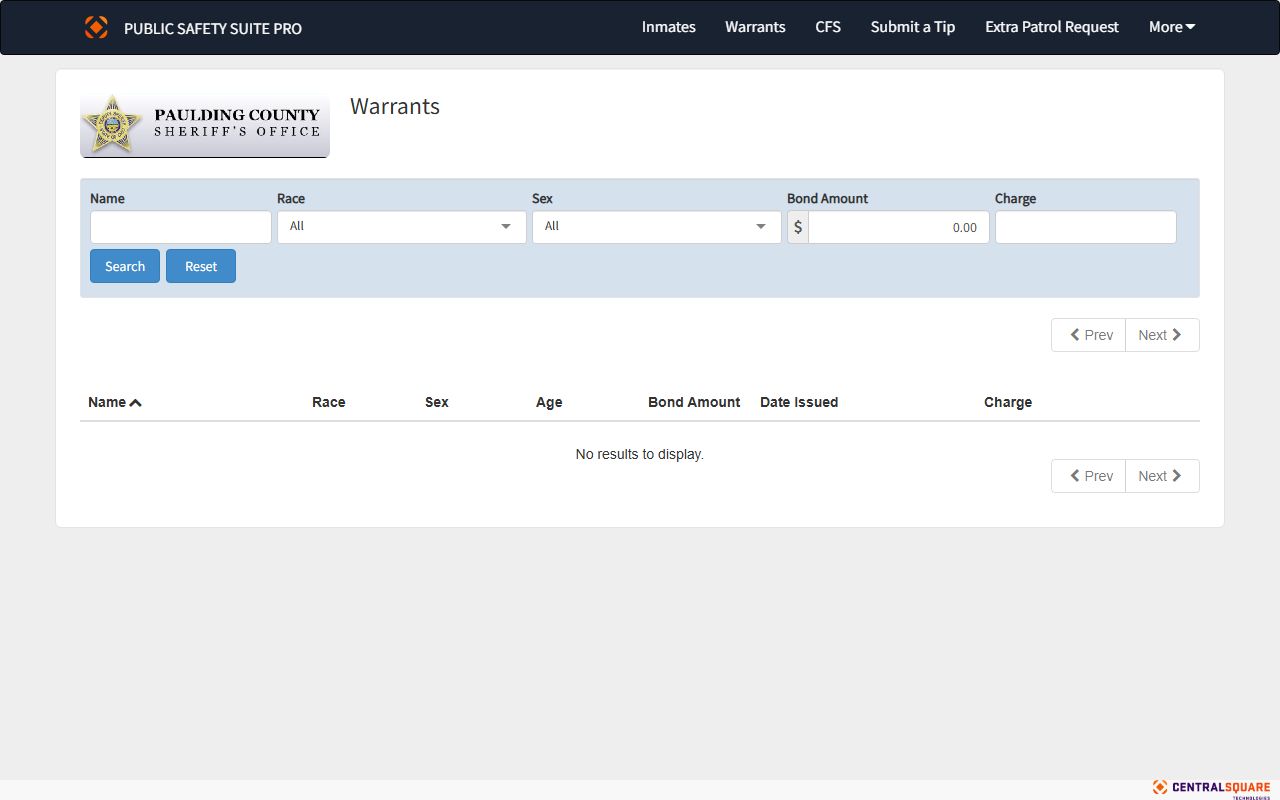
Once a warrant is served or recalled, the controlling court docket is the better source for bond, recall, disposition, and whether the warrant remains active.
Paulding research identified bench warrants, arrest warrants, indictment warrants, probation violations, and outside-agency holds as relevant custody paths. There was no separate warrant-only phone line located. Use the sheriff main number, (419) 399-3791, for general warrant-public-record questions and the jail number, (419) 399-2170, for current custody questions. Do not walk in to clear a warrant without first speaking with counsel or the court, because surrender can result in immediate arrest.
Charges vs. Convictions
An arrest and a charge are accusations or custody events. A conviction is a later court outcome after a guilty plea, no-contest finding where accepted by the court, or trial verdict. Public court records after a jail arrest may show both allegations and final outcomes, so the labels matter. A person can be arrested and booked, charged by complaint or indictment, then have one charge dismissed while another remains pending or results in conviction.
| Charge | Conviction | |
|---|---|---|
| Stage | Accusation filed or listed in the case. | Final finding by plea or verdict. |
| Proof Level | Depends on charging stage, such as probable cause or grand-jury finding. | Beyond a reasonable doubt for criminal conviction. |
| Where It Appears | Complaint, information, indictment, docket charge list, or roster hold text. | Judgment entry, plea entry, sentencing entry, or disposition field. |
| What It Proves | That the government alleged an offense. | That the court entered a criminal finding. |
Sealed vs. Expunged Arrest Records
Ohio sealing and expungement are court-driven. ORC 2953.32 governs sealing and expungement of eligible conviction and bail-forfeiture records, including waiting periods, hearings, prosecutor or victim notice, and court orders. The Paulding sheriff records policy says the records custodian reviews expungement or sealing orders and handles arrest, investigation, detention, or conviction records as ordered. Once sealed or expunged, staff respond as though the record did not exist when the order requires that treatment.
| Sealed | Expunged | |
|---|---|---|
| Public Visibility | Removed from ordinary public view. | Destroyed, deleted, or treated as not existing when the statute and order require it. |
| Government Access | Limited access may remain for authorized purposes. | More restrictive treatment, controlled by the court order and Ohio law. |
| How It Happens | Eligible person seeks a court order under Ohio sealing law. | Eligible person seeks a court order under Ohio expungement law. |
| What to File | Use the court that handled the case. | Use the court that handled the case. |
Background Check Considerations
Casual public-record lookup is not the same as an employment, housing, insurance, credit, licensing, or other regulated background check. A court docket may be incomplete, delayed, sealed, corrected, or limited by statute. Anyone using Paulding County court records after an arrest for a decision covered by the Fair Credit Reporting Act must use a legally compliant consumer-reporting process and verify records at the source.
Important: This website is not a consumer reporting agency and may not be used for FCRA-covered decisions.
Restricted Court Records After an Arrest in Paulding County
Ohio's Public Records Act, ORC 149.43, supports access to public records but also recognizes exemptions. Restricted material can include confidential law-enforcement investigatory records, trial-preparation records, protected victim images, certain juvenile records, sealed or expunged files, and other information made confidential by law. ORC 341.02 separately requires the sheriff to keep a jail register with prisoner name, commitment date and cause, and discharge date and manner, but that does not make every underlying document public.
For records requests to the Paulding County Sheriff's Office, the local policy identifies Lt. Matt McDougall as the records-request contact. The policy says requests do not have to be written, and the requester does not have to provide identity or intended use. The office may ask for that information only after explaining that it is optional and useful for locating or delivering the record. Denials and redactions should be explained with legal authority.